
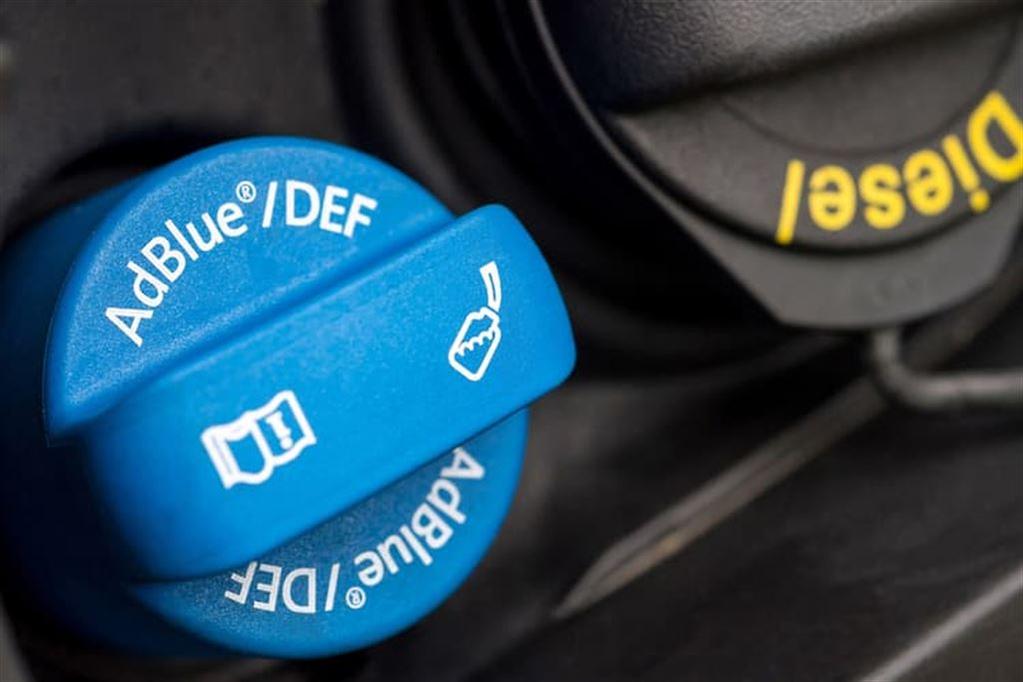
You don’t have to top up with AdBlue every time you fill up. Most drivers only fill it up every few thousand kilometres, at a scheduled service or when the dashboard warning comes up.
In this guide, we explore AdBlue and when to top it up, what the warning actually means, what happens if your tank runs dry and if you can top it up yourself. To clarify, this is AdBlue, also known as diesel exhaust fluid, not engine oil or coolant.
TL;DR
- AdBlue is a separate fluid on modern diesels, held in its own tank, and it empties slowly, so you won’t be topping it up at every fill.
- Top it up when the dashboard warning appears, or have it checked and refilled at each service.
- Never let it run empty. Once the tank is dry, many vehicles won’t restart until AdBlue is added.
- On European and prestige diesels, it’s perfectly fine to top up yourself if done carefully, or simply have it handled at your next service.
What Is AdBlue and Why Your Diesel Needs It
AdBlue is a urea-based fluid used by your vehicle’s selective catalytic reduction (SCR) system. Injected into the exhaust stream, it converts harmful nitrogen oxide emissions into harmless nitrogen and water vapour, which is how modern diesels meet strict emissions standards. It is stored in its own dedicated tank, completely separate from the diesel.
Always remember that AdBlue is a normal consumable on modern diesel vehicles, like fuel or washer fluid. It’s not a sign that something is wrong. If your car uses it, topping up is simply part of ownership.
How Often Do You Need to Top Up AdBlue?
Consumption varies with driving style and load, but a useful rule of thumb is roughly 1.5 litres of AdBlue per 1,000 kilometres, a figure Volkswagen Australia quotes for its diesel range. With a typical tank holding around 15 to 20 litres, most drivers travel thousands of kilometres between top-ups, typically a full service interval or more.
How often you need to top up AdBlue depends on when the dashboard warning appears or at each service, not at every visit to the servo. That said, heavier loads, towing, frequent long-distance trips and sustained highway driving all increase consumption. So if that sounds like your kind of driving, it’s worth checking the level more often rather than waiting for the countdown.
What the AdBlue Warning Light Means
Modern vehicles warn you well before the tank runs dry. Most display a remaining-range countdown, a message showing how many kilometres of AdBlue range are left, and the alerts become more insistent as the level drops.
An early warning is a reminder, not an emergency. You typically have over a thousand kilometres of notice, so there’s no need to divert to the nearest servo in a panic. But every kilometre brings you closer to the final alerts, so don’t ignore it either. The best move is to top up soon after the first warning, while the remaining range is still comfortable, rather than letting it run down to the final alerts.
What Happens If You Don’t Top Up AdBlue?
This is the scenario the warning system is designed to prevent. If the AdBlue tank runs empty, many diesels drop into a reduced-power ‘limp mode’ and will not restart once switched off until AdBlue is added. This is deliberate, built in by manufacturers to keep the emissions system compliant.
The reassuring part is that running out doesn’t damage the engine. However, it can leave the car immobilised at the worst possible moment. That’s why the warning deserves a response.
If you’ve had a warning you’re unsure about, or the car has already restricted power, a European car mechanic like Cavalo can refill the system and confirm everything is behaving as it should.
Can You Top Up AdBlue Yourself?
Yes. In most cases, topping up AdBlue yourself is straightforward. The filler is clearly marked, usually with a blue cap, and is usually located beside the diesel filler, in the boot or under the bonnet. Service stations and auto parts stores sell AdBlue in bottles with no-spill spouts.
There are a few simple precautions worth keeping in mind:
- AdBlue is corrosive to paint and trim, so avoid spills and wipe up any drips promptly.
- It must never go into the diesel tank. The two fillers are intentionally different sizes, but it pays to be certain.
- Because AdBlue has a limited shelf life, use fresh fluid rather than a bottle that’s been sitting in the garage for a year.
On prestige and European vehicles, there are scenarios when the workshop is the better call: if the filler is awkward to access, if the warning won’t clear after a top-up, if the car has already entered limp mode or if it reports an SCR emissions system fault.
Topping up AdBlue is also one of those small jobs that’s best handled during logbook servicing.
FAQs
Where do I put AdBlue in my car?
The AdBlue filler is separate from the diesel filler, and is usually marked in blue. Depending on the model, it will be either next to the fuel cap, in the boot or under the bonnet. If you’re not sure, check your owner’s manual or ask your workshop to show you where it is at your next service.
Where can I buy AdBlue in Australia?
AdBlue is widely available across Australia at service stations, auto parts stores and some supermarkets. It is typically sold in bottles with a spill-proof spout. Your workshop can also supply and top it up during a service, which is usually the easiest option.
Will the AdBlue warning clear after I top up?
Usually, yes. After adding enough fluid (most systems need a minimum amount to register), the warning clears on its own once the car is restarted or driven a short distance. If it stays on after a proper top-up, the system may need a workshop check, so book it in straight away rather than continue to drive it with the active warning still on.
Does AdBlue go off or expire?
It does. AdBlue has a limited shelf life of around 12 months in typical storage, and it degrades faster in heat. Rather than storing opened bottles for long periods, buy fresh AdBlue as you need it.